
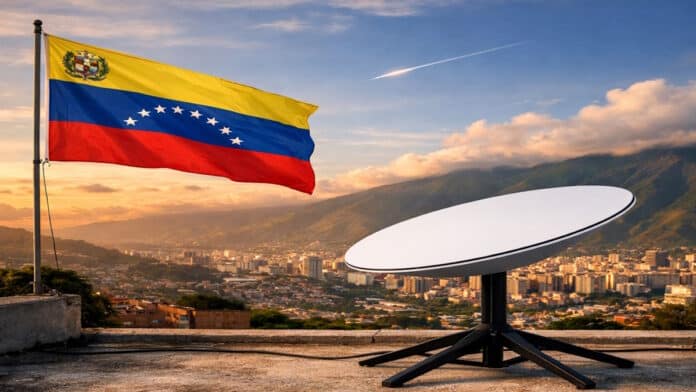
In the middle of Venezuela’s most dramatic political upheaval in years, SpaceX-owned Starlink has announced it will provide free broadband internet services across the country through February 3.
The move comes days after a U.S. military operation led to the capture of long-time Venezuelan leader Nicolás Maduro, surrounding the nation with leadership uncertainty. Musk reposted Starlink’s message on X, stating that the decision was made “in support of the people of Venezuela.”
“Starlink is providing free broadband service to the people of Venezuela through February 3, ensuring continued connectivity,” the company said. According to Starlink, service credits are being automatically applied to both active and inactive accounts, allowing users who had paused service or lost access due to payment issues to reconnect during the free period with existing equipment.
A Nation In Upheaval
The timing of the move is striking. The free internet rollout coincided with dramatic footage released by U.S. authorities showing Maduro in handcuffs during a staged “perp walk,” calmly wishing reporters and Drug Enforcement Administration a “Happy New Year” and “Good Night” as he was taken into custody.
In the wake of Maduro’s removal, Venezuela’s Supreme Court moved swiftly to address the power vacuum. Citing constitutional provisions, the court ordered Vice President Delcy Rodríguez to assume the powers and duties of acting president, ruling that Maduro was in a “material and temporary impossibility to exercise his functions.”
The decision was read publicly during a televised session on state channel VTV, with officials saying the move was necessary to ensure administrative continuity and national stability.
Connectivity Amid Outages
The U.S. operation, which reportedly targeted military and strategic locations in Caracas, as well as in the states of Miranda, Aragua, and La Guaira, was followed by local media reports of power and internet outages, particularly across parts of the capital and surrounding regions, leaving many residents disconnected during a critical moment.
In that context, Starlink’s satellite-based system — which bypasses traditional ground infrastructure — could play a critical role. The service uses low-Earth orbit satellites to deliver internet access, allowing users to bypass damaged networks or government-controlled shutdowns or network failures on the ground.
Starlink has not disclosed how many users it currently has in Venezuela, nor how many users are affected, nor what the service will cost after February 3. For now, however, the satellite provider’s intervention offers a crucial digital lifeline to keep people connected during one of Venezuela’s most turbulent moments in recent history.